
Protective film for your glass table: transparent and made to measure
In short
Yes, glass is a suitable substrate. Clean the panel grease-free beforehand, because glass is unforgiving of dust under the film. The film protects the surface from signs of wear; it is not a shatter-protection film and does not replace safety glass.
Glass tables show every scratch. What the film does on glass, what it does not, which film fits and what to watch out for when applying it.
Updated:
Why glass is suitable
Glass and ceramics are among the suitable surfaces: the surface is smooth and closed, and the acrylic adhesive adheres across the whole area. Glass panels, display cases and tile splashbacks belong here too. Anyone with a glass table can protect it from signs of wear with a transparent film without the look suffering.
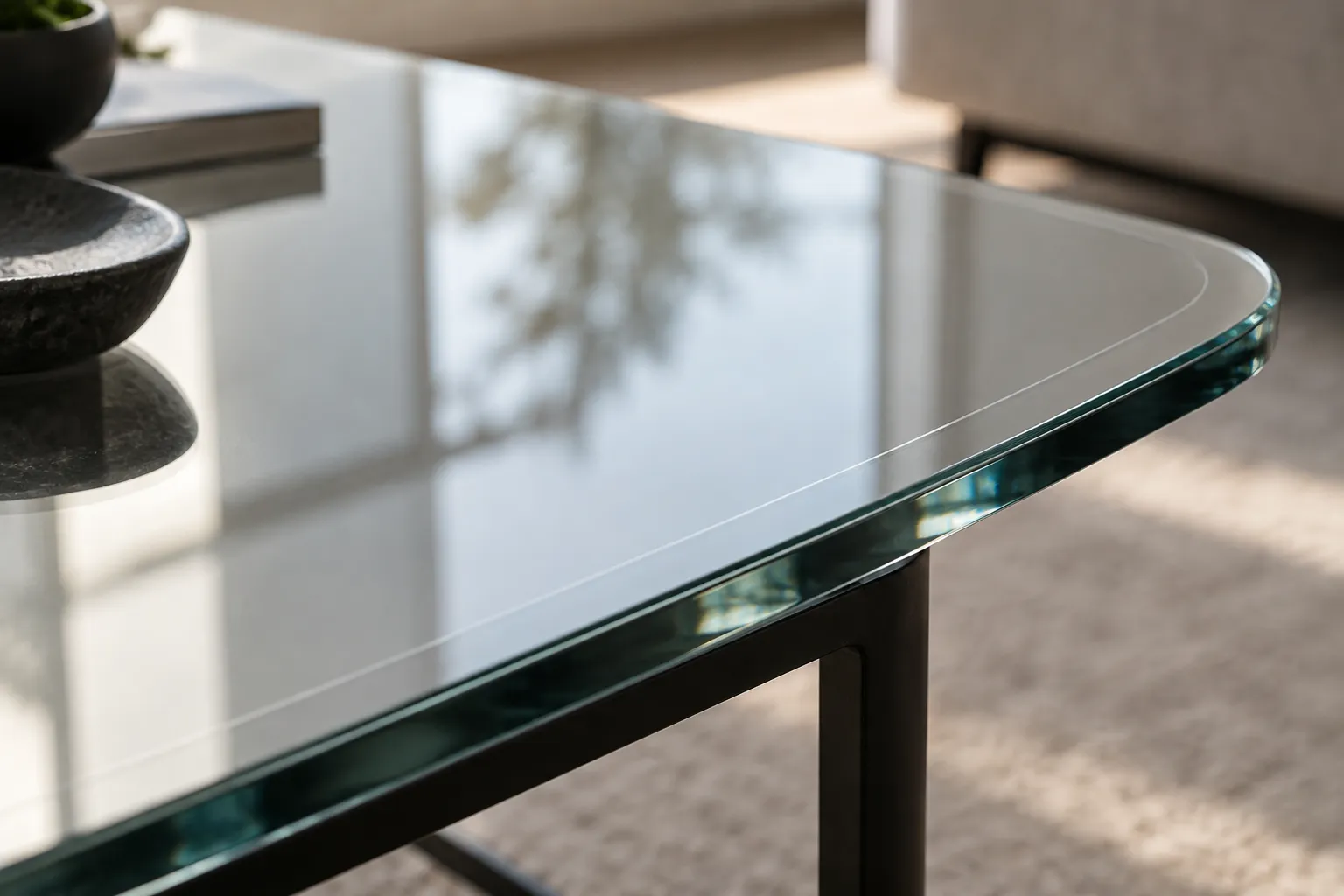
On glass the film stays practically invisible if it is laid cleanly. You can feel the edge with a finger if you look for it. Depending on the light you may see it as a fine line, especially at the outer edge of the panel.
What the film does on glass – and what it does not
The film lies as a thin layer over the glass. Signs of wear such as scratches from crockery, keys or pens hit it first, not the glass beneath. With Premium Clear fine scratches even out again in the surface; deep cuts remain.
What matters is what it is not: it is not a shatter-protection film and does not replace safety glass. It does not hold a cracked pane together, and we do not promise that. Hot pots still belong on a coaster, because the film is not heat protection.
Applying: grease-free, low-dust, calm
Plan a quiet period for applying, when the table is free and nobody touches the panel. Clear the table completely, close windows and doors where possible so that no dust is stirred up, and have cutter, squeegee, cloth and spray bottle ready.
Glass forgives dust and grease under the film less than a textured surface: every speck is visible through the clear material. So clean the panel thoroughly, remove grease film and fingerprints and work as dust-free as possible.
Then, as everywhere: apply wet so the film stays movable, squeegee from the centre outwards and remove bubbles while the film is still wet. After application the film needs 24 hours to cure.
For glass tables with a visible rim or bevelled edge, a 1:1 trial template is worthwhile, which you print and place on the panel. That way you see before ordering whether dimensions and corner radius fit.
Round, oval, square: ordering made to measure
Glass tables come round, oval and rectangular, often with rounded corners. In the configurator you choose the shape, enter the dimensions and see area and price immediately. With “Exact to size” we cut the contour and you only lay it on.
If you have not measured the table yet, the measuring guide with a drawing for each shape helps. With very large glass panels you work in pairs.
If there is a rim that projects beyond the panel, or an edge with a bevel, you measure only the flat surface the film is to cover. The film ends where your dimension ends. If you would rather have it end just short of the edge, plan for that when measuring.
Not sure whether your panel is glass or a plastic that looks like glass? Tap the panel, look at the edge or send us a photo. For unclear substrates we also check adhesion on a sample.
Frequently asked questions
Is the protective film a shatter-protection film for glass?
No. The film protects the surface from signs of wear. It does not replace safety glass and does not hold a cracked pane together.
Can you see the film on a glass table?
Practically not on the surface. You can feel the edge with a finger if you look for it, and depending on the light it can be seen as a fine line.
What is different about applying to glass?
Glass is unforgiving of dust under the film. Clean the panel grease-free and work in a low-dust way; otherwise you see inclusions through the clear material.
Can I peel the film off again later?
Yes. The film comes off slowly at a flat angle, with a little heat for older applications. A film that has been peeled off cannot be used again.