
Protecting high-gloss furniture and piano lacquer
In short
On high gloss a crystal-clear film disappears: Premium Clear for surfaces used every day, Clear for less stressed furniture. High Gloss is the thickest film and preserves the depth and gloss of piano lacquer. Matte, on the other hand, takes the gloss away.
High gloss shows every scratch and every fingerprint. Which film preserves the gloss, which takes it and what to watch out for in preparation.
Updated:
Why high gloss looks particularly delicate
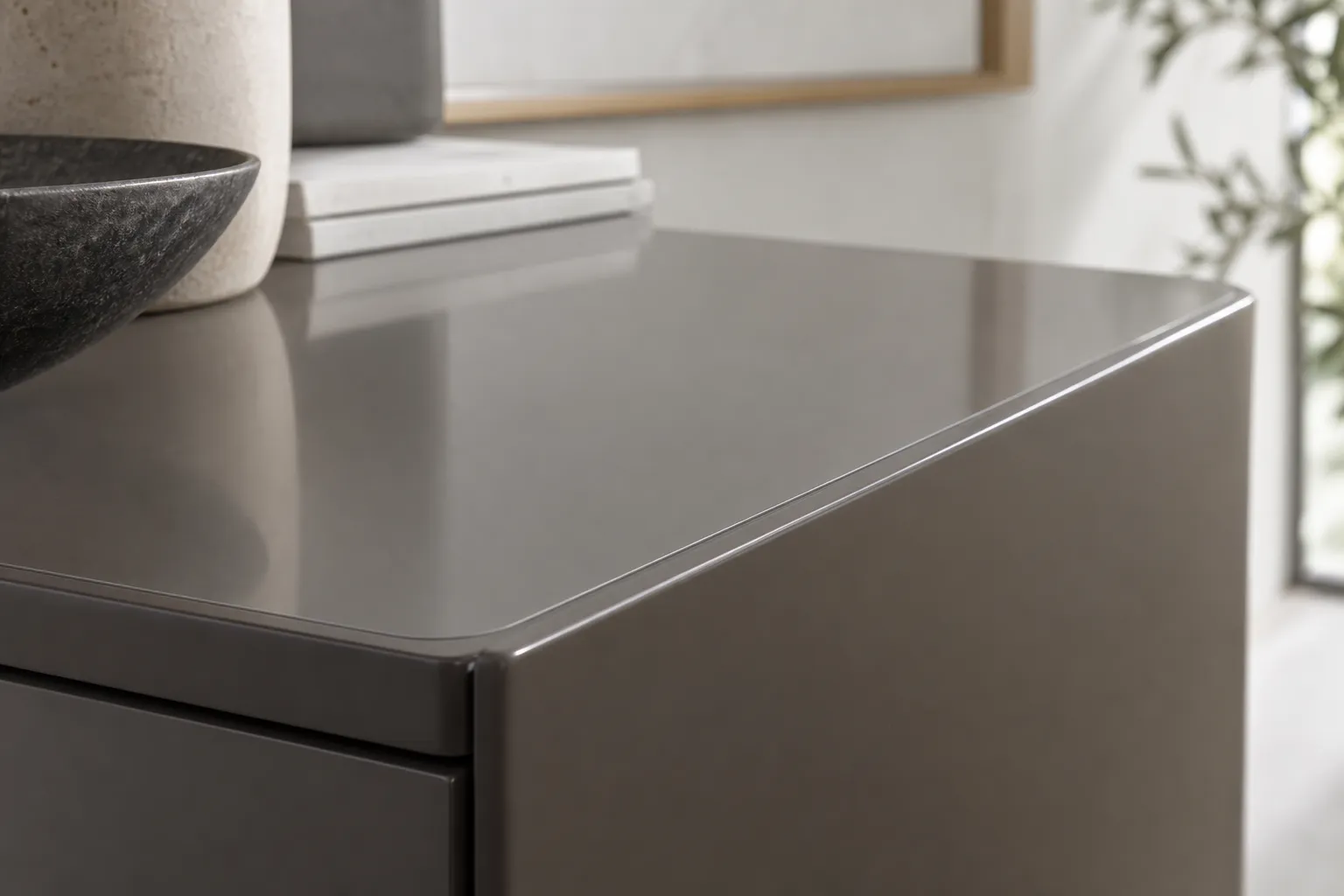
On glossy surfaces every sign of wear is noticed immediately: fine scratches, wipe marks, fingerprints. That is not because of a weak surface but because light on a smooth, dark surface shows every flaw.
A transparent film lies as a layer over the lacquer and takes up these marks. What matters is that it does not change the gloss. That is why the clear films are the right choice for high gloss.
That applies to piano lacquer just as much as to high-gloss fronts in kitchen, bathroom and living room, more to dark panels than to light ones. The darker and smoother the surface, the more it shows what happens to it.
Anyone with high gloss knows: cleaning alone is not enough, because every wipe can leave new fine marks. A film takes up this wear without the look suffering and can later be replaced by a new piece.
High Gloss: for piano lacquer and design surfaces
High Gloss is the thickest film in the range, high-gloss and crystal clear. It lies like a second coat of lacquer over the surface. On piano lacquer depth and gloss are preserved, and like Premium Clear it is self-healing for fine scratches.
It has the highest price per square metre and for large living surfaces is usually more than necessary. For individual piano-lacquer fronts, trims and design surfaces it is the fitting choice. On matte surfaces its gloss would be clearly visible.
Whether High Gloss is approved for a particular piano-lacquer trim in a vehicle interior, we clarify case by case with a sample. Send us a photo or a piece of the surface for that.
And if the gloss is to go?
Some deliberately want to get rid of the gloss: less reflection, fewer visible fingerprints. That is what Matte is for. It turns the high-gloss surface into a matte one and is thus a decision about the look, not only about protection.
Fingerprints are less noticeable on Matte than on high gloss, but they do not disappear entirely. Look at the effect beforehand with the sample set.
Think beforehand whether you will like the matte look in the long run: Matte can be peeled off, but you should not order it without having seen it. The sample set costs little compared with a wrong choice.
Preparation and factory film
New high-gloss furniture often has a transport protection film. It has to come off before the protective film goes on. Peel it off slowly and flat; for stubborn spots a little heat from the hairdryer helps.
Then clean the surface free of grease and dust. Freshly painted surfaces need at least four weeks of curing beforehand, otherwise the adhesive can leave marks in the paint. Then apply wet and squeegee from the centre outwards; dust is particularly noticeable on high gloss.
The transport protection film is something different from our protective film: it is not meant for permanent use and has to go before the surface is used. Always peel it off completely and check that no adhesive residue remains before you clean.
Frequently asked questions
Can you see a protective film on high gloss?
A crystal-clear, glossy film on a glossy surface practically not. You can feel the edge with a finger if you look for it.
Which film suits piano lacquer?
High Gloss: it is high-gloss and preserves depth and gloss. For a piano-lacquer trim in a vehicle interior you clarify suitability beforehand with a sample or a photo.
What if the surface is freshly painted?
Then let it cure for at least four weeks. Before that the adhesive can leave marks in the paint.
Does the film make the surface matt?
Only Matte. Clear, Premium Clear and High Gloss leave the gloss as it is.